
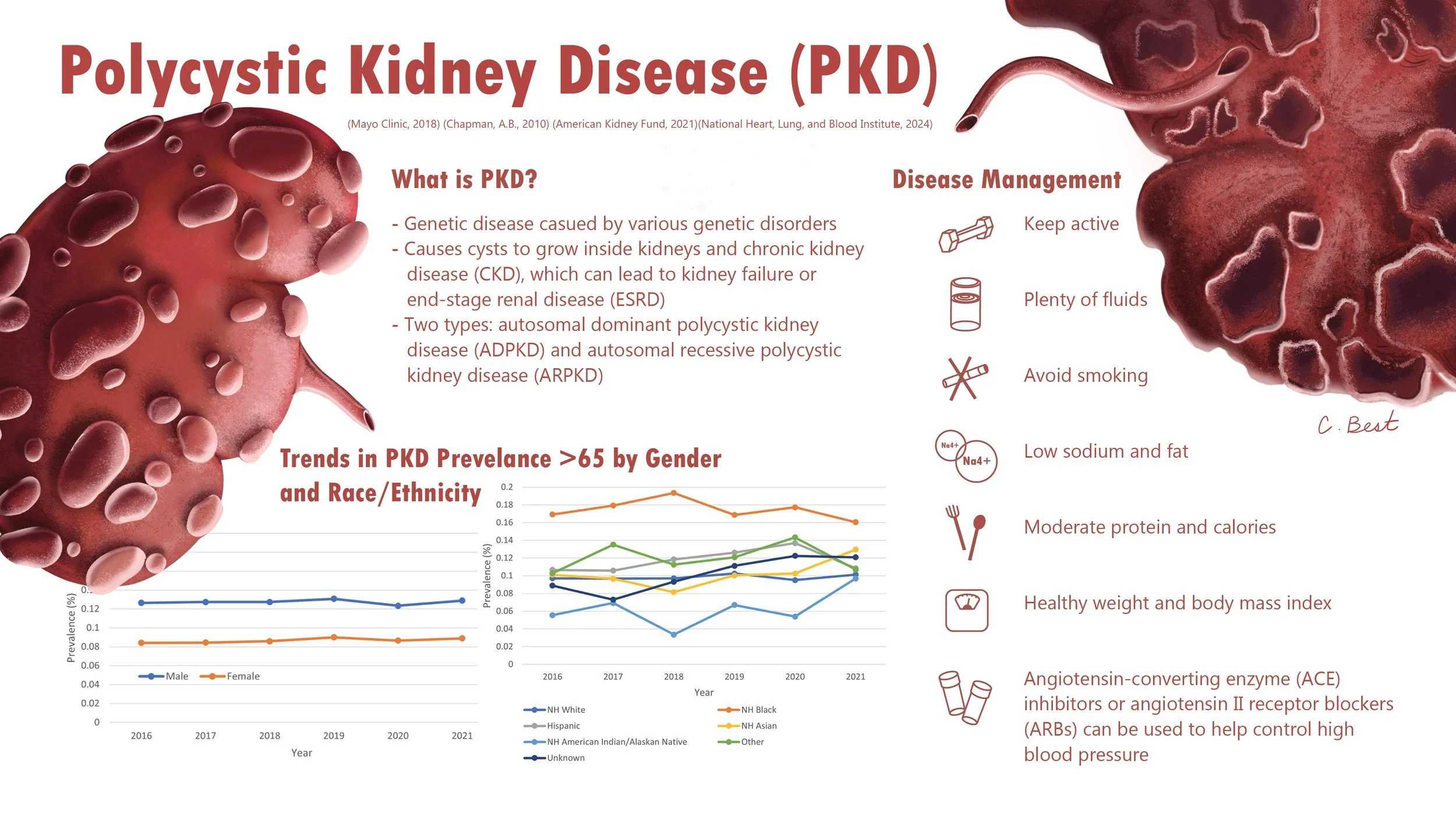
Polycystic Kidney Disease (PKD)
Use-Case: educational presentation slide
Target Audience: medical audience & patients being introduced to PKD
1. Research/Planning
1.
2.
3.
4.
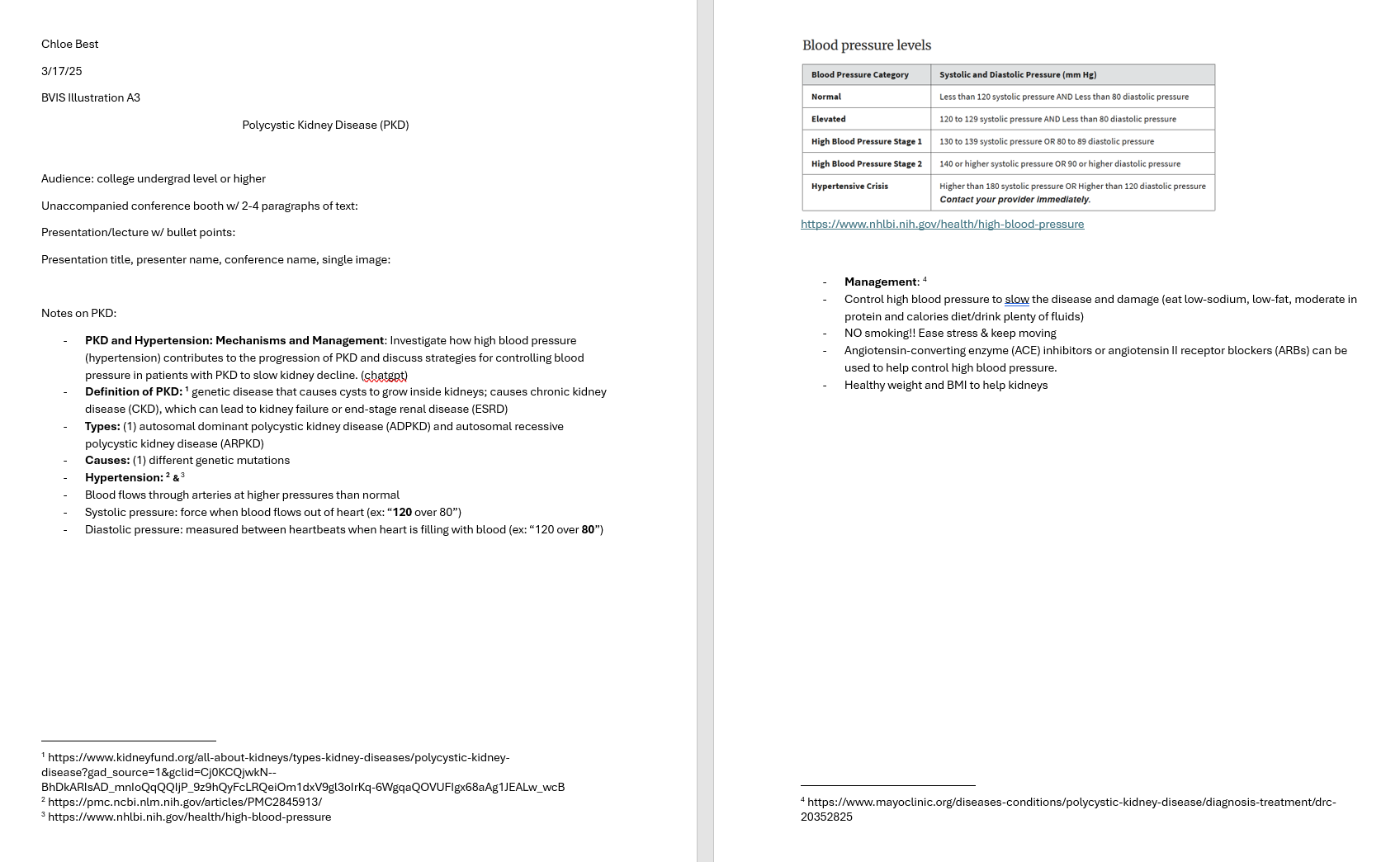
This project called for a three-slide PKD design for a medical conference: title, summary, and full information. The client wanted the slides to be suitable for both medical audience (undergraduate level or higher), as well as a general audience of patients being introduced to PKD. This project breakdown focuses on the full information slide.
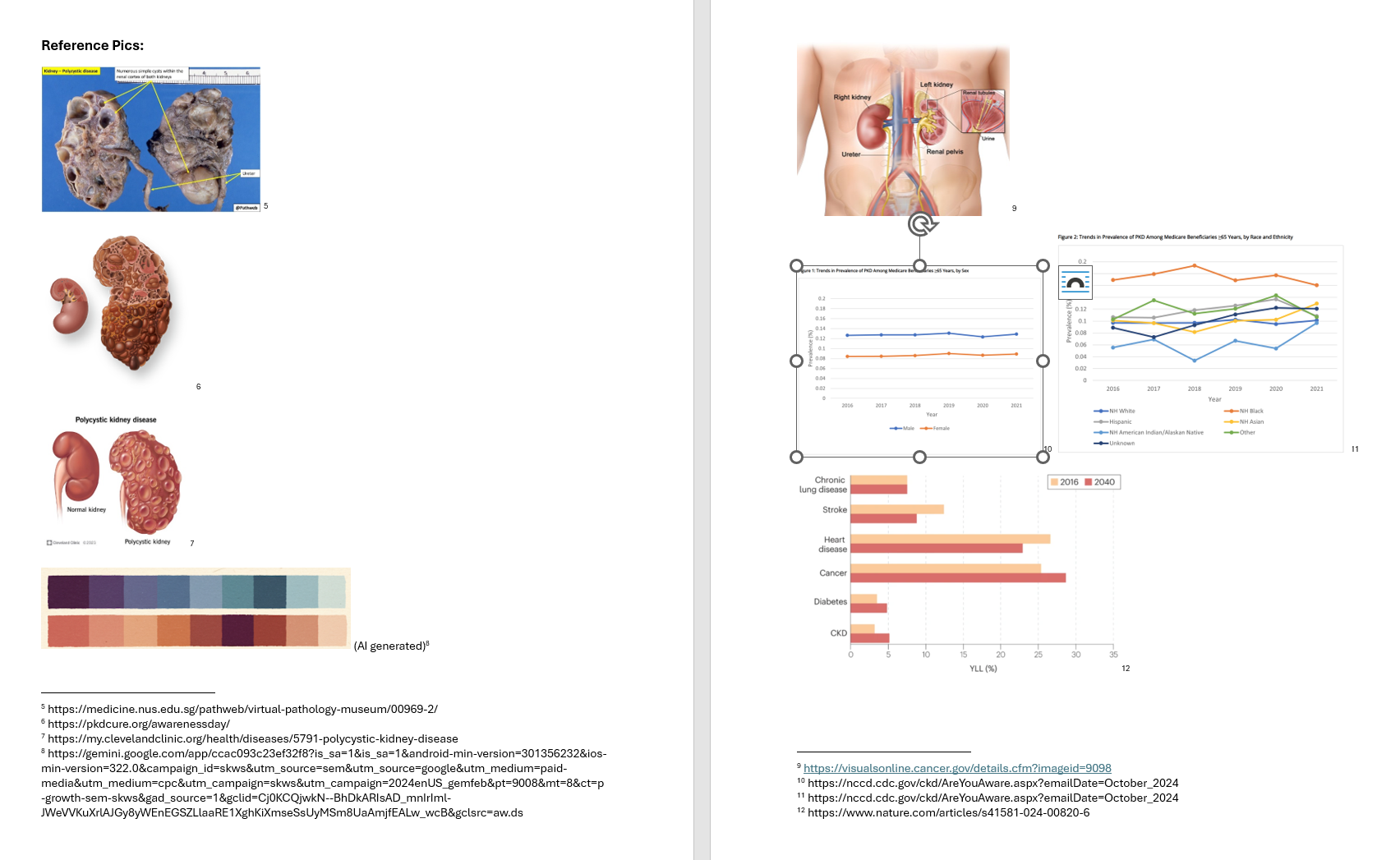
Pictured here is the document I began the project with for background research, goals, audience, and references. This document eases client communication and gives a place for notes and updates throughout development. Image references and data charts are important for accuracy, to understand a feel for the piece overall, and are found early in the process so revisions can be made if necessary.
2. Design Ideation
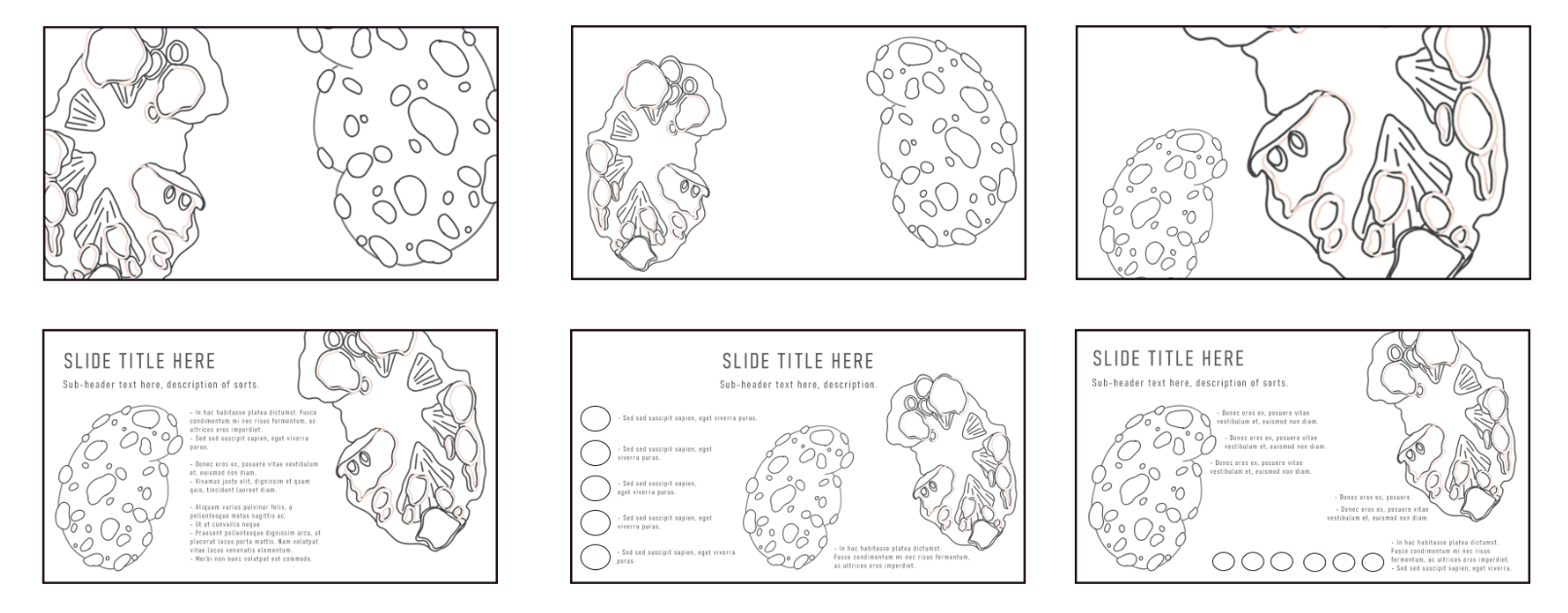
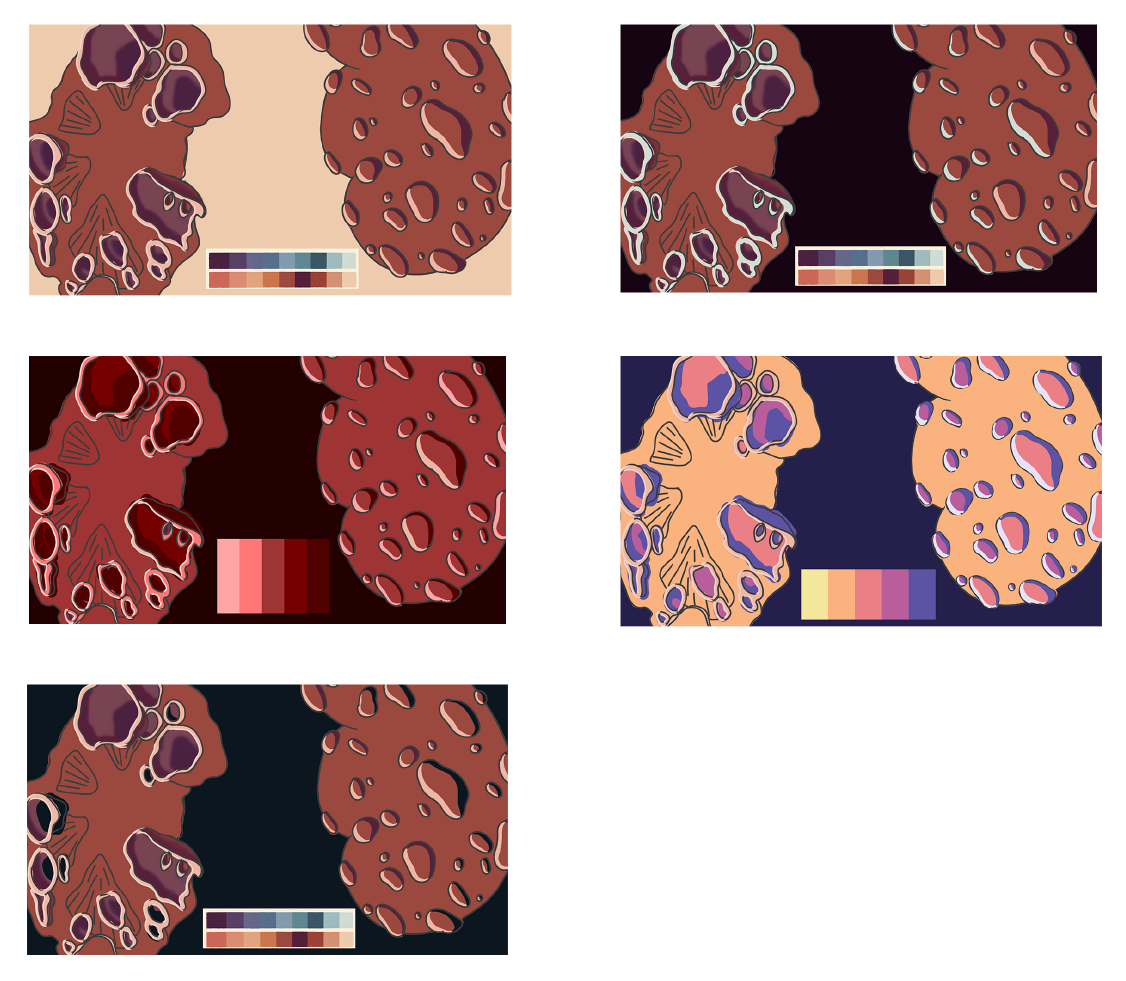
Once the baseline research was complete, deliverable creation began with thumbnails and color tests. Scale and relationship to borders were big factors to draw the audiences’ eyes through the composition and highlight the most important information.
I also knew I wanted to incorporate the offset anatomical nature of the kidneys, as it would add to dynamic visual interest. The color palette majorly changes the feel, so it was vital to choose something that felt alive and attention-grabbing, but not too distracting.
3. Feedback
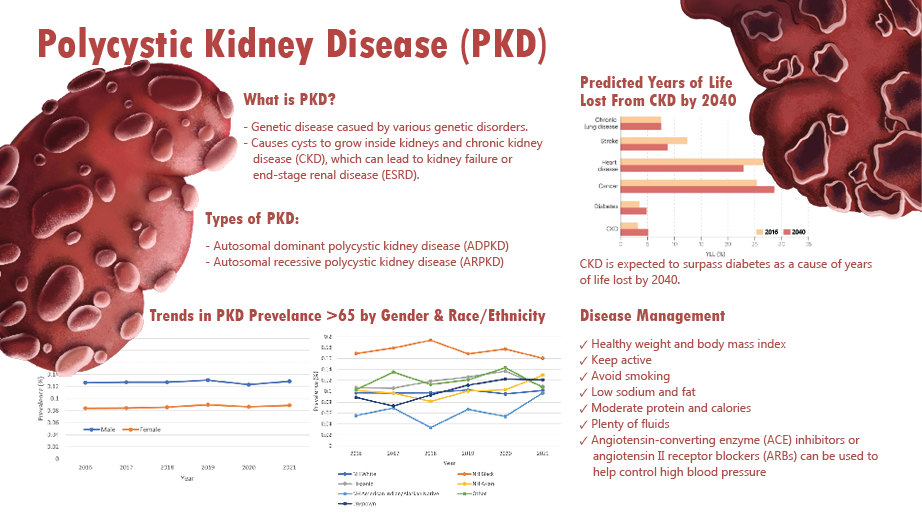
Once a color palette and composition were chosen for the full information slide, rendering of the kidneys was the next step. Dramatic, consistent lighting was necessary to stress the impact of the topic and frame the data through a subtle vignette.
At this point in the process and as pointed out through peer feedback, the slide was very text heavy. Although sometimes necessary, cognitive load can be reduced by substituting text with icons and combining sections. Additionally, it was suggested to include ureters, as they are vital structures to the kidneys and would improve visual flow.
4. Finalize
The final full-information presentation slide includes the kidneys and ureters, general information about PKD and management, icons, data graphs, overlapping, and the use of negative space. These factors combined create a clear, accurate image with reduced cognitive load for an audience of patients first learning about the disease.